Disciplines
Web Design
Brand Strategy
Timeline
In progress
Skills
Web Design
Tools
Figma
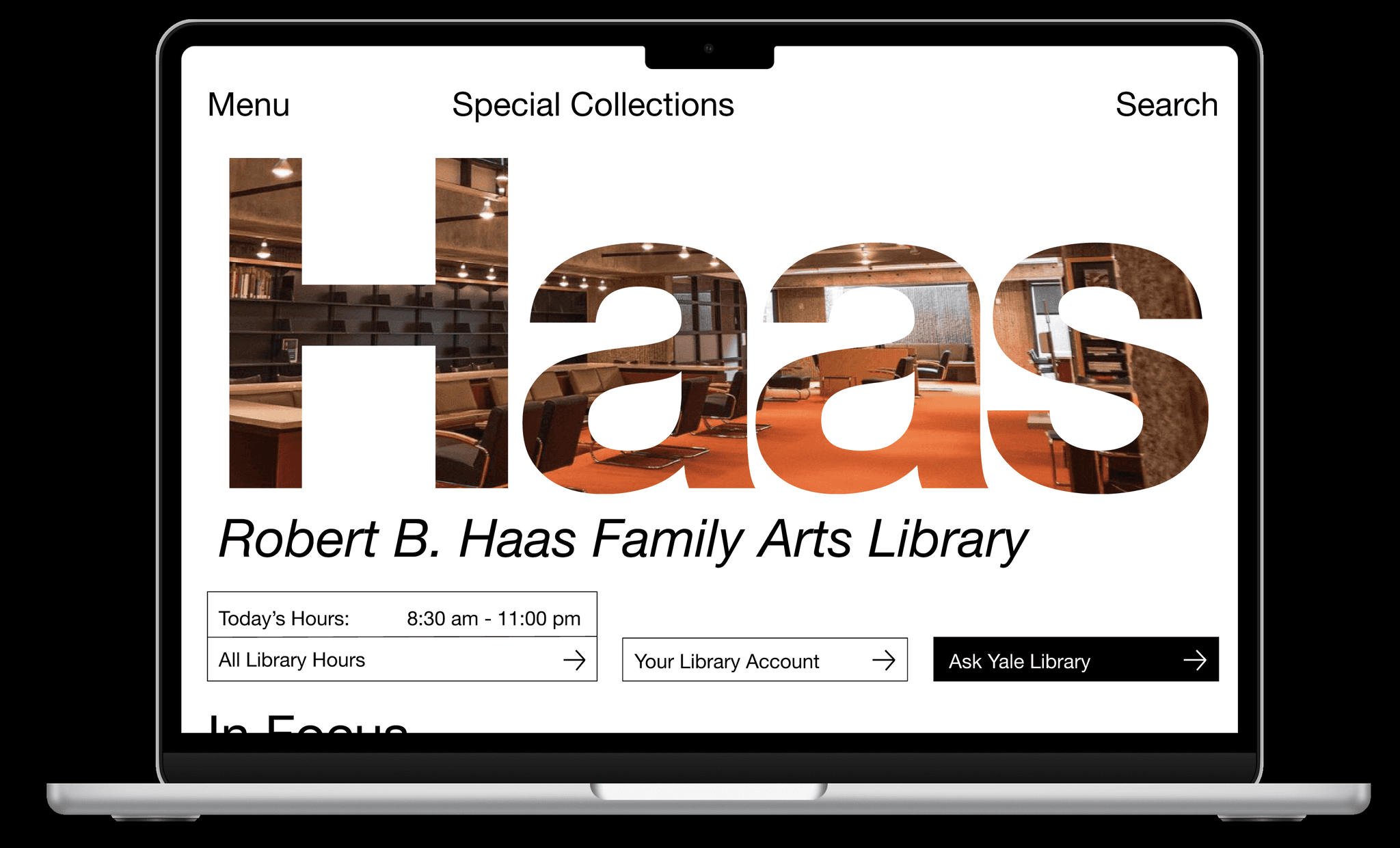
Robert B. Haas Arts Library Redesign: reframing how Yale’s arts community accesses resources through clarity, hierarchy, and identity.
THE CONTEXT
The Robert B. Haas Family Arts Library, located on the main floor of Yale School of Architecture's Rudolph Hall is Yale’s central hub for art, architecture, and design collections — yet its digital presence has lagged behind its influence. The existing site consolidates all content into a single, dense page, making navigation confusing and limiting engagement, especially with Special Collections, a valuable but underused resource.
THE PROBLEM
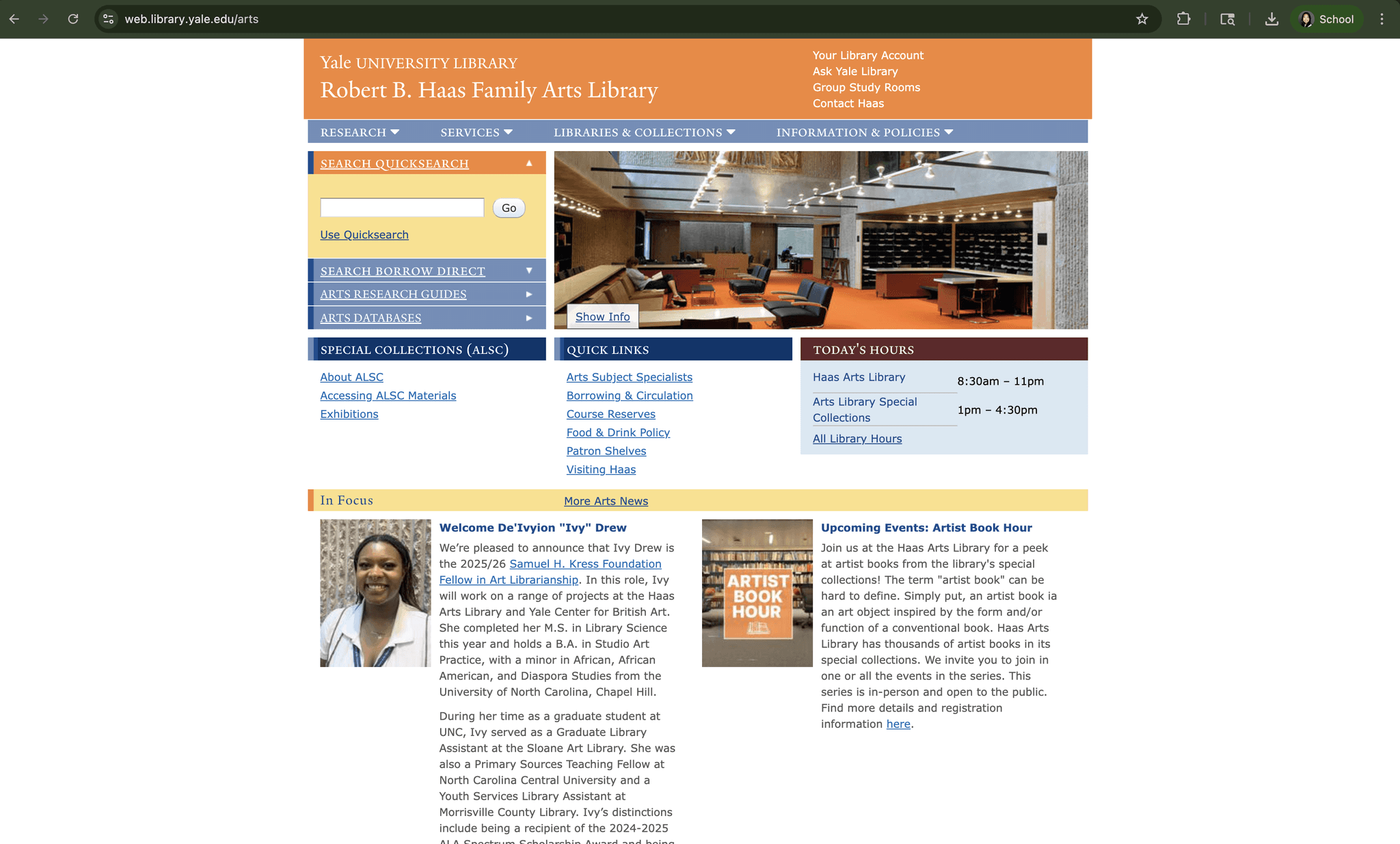
It’s hard to believe this is Yale’s arts library — the website has zero visual rhythm, no hierarchy, and somehow manages to make the world’s most beautiful paprika carpets feel dull. Everything from research guides to booking rooms is crammed onto one endless page, making navigation an absolute headache not to mention it takes up maybe 30% of the screen.
DEVELOP
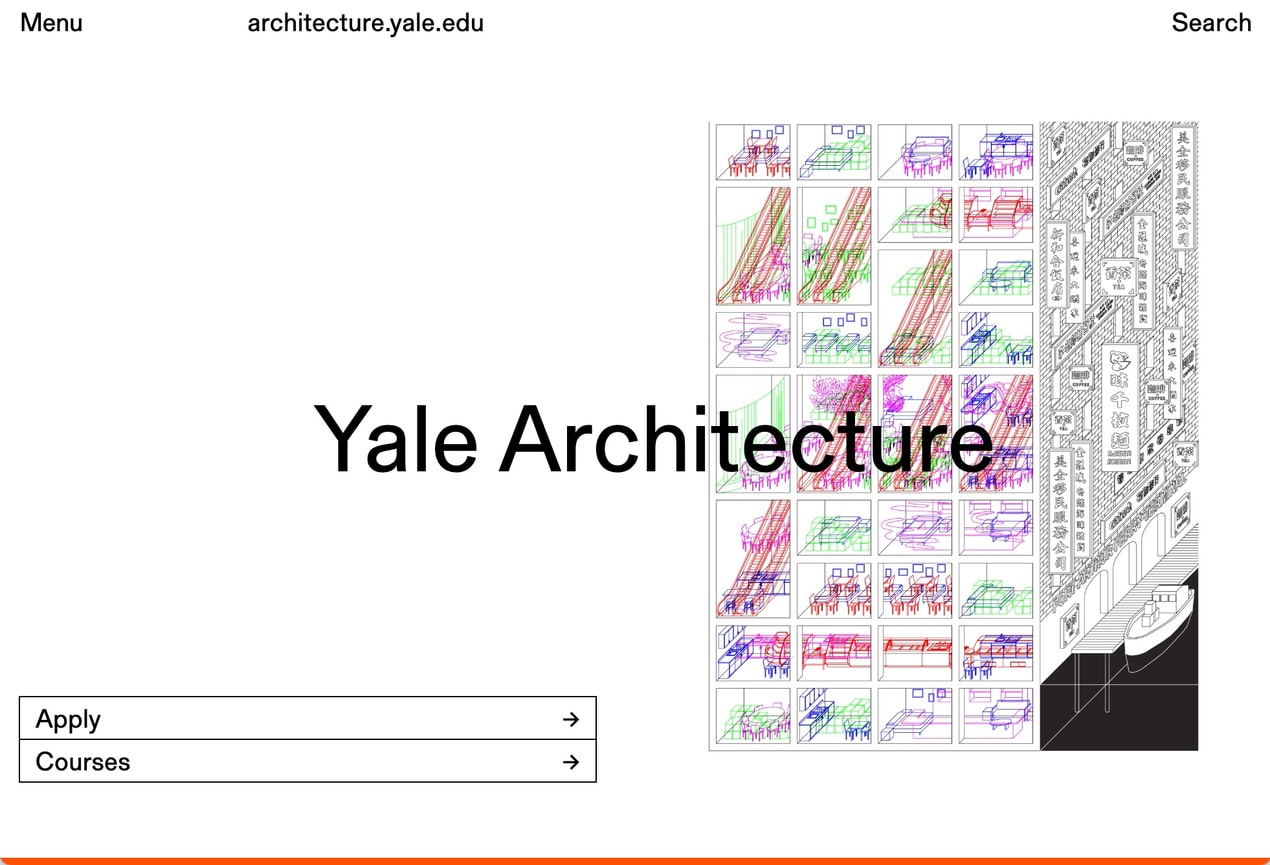
To guide the redesign, I studied the Yale School of Architecture’s website — not just for aesthetics, but for how its typography, spacing, and grid system create hierarchy and visual calm. Haas Arts Library is physically housed within the Architecture building, aligning their digital identities felt both intuitive and symbolic, extending a shared design language across physical and digital space.
From speaking with staff and Special Collections curators, it became clear that Haas wanted to better showcase its research prestige and deep resources, but the current site’s structure buried them. This insight shaped a new hierarchy designed to surface collections, tools, and archives more intentionally.
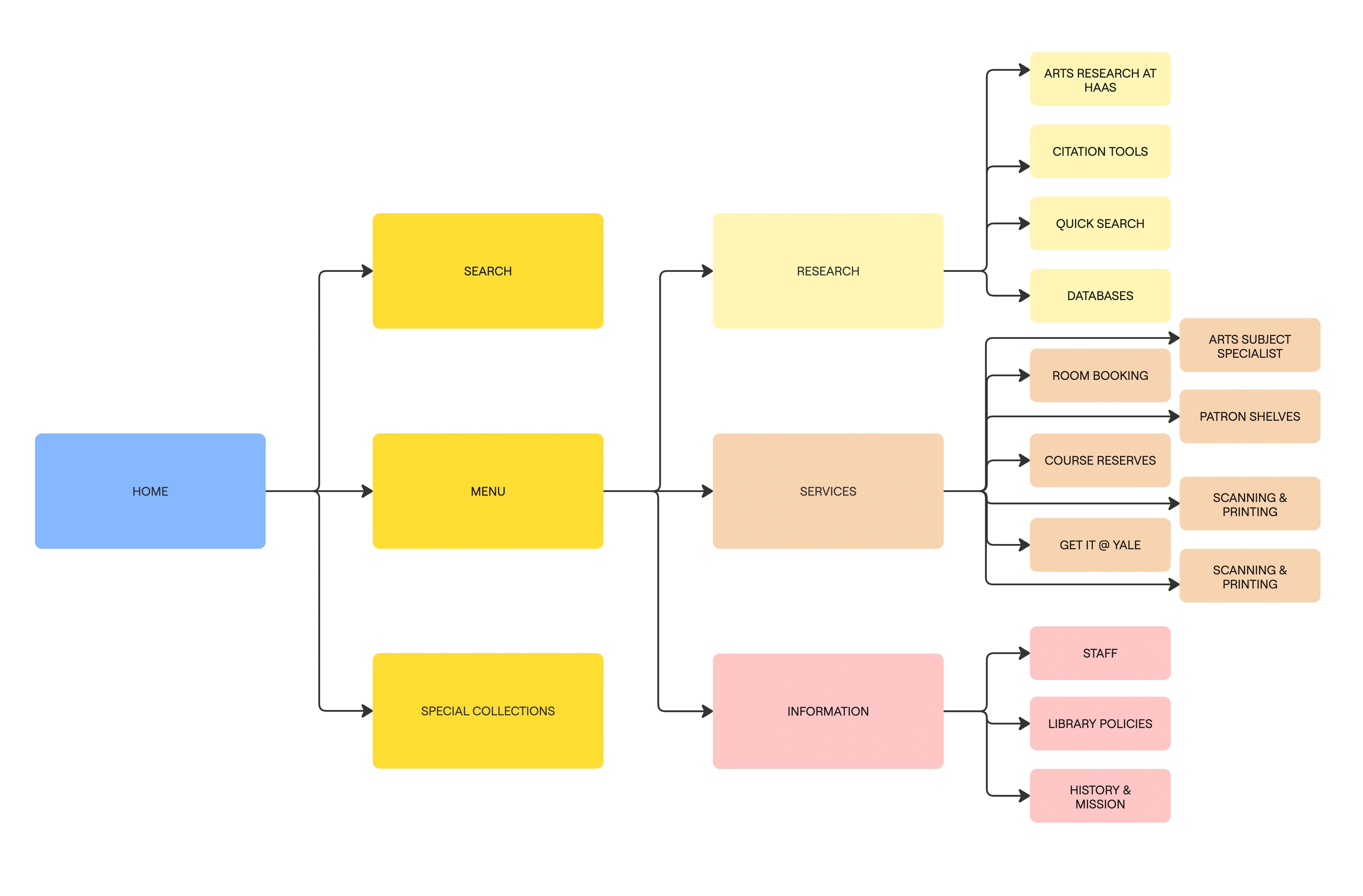
I introduced a dedicated Menu that reorganizes the entire site into three intuitive categories:
RESEARCH
tools, databases, guides
SERVICES
room booking, course reserves, printing
INFORMATION
staff, policies, history
Giving each section its own clear destination dramatically reduces cognitive load and mirrors how students naturally look for information. Instead of scrolling endlessly, they can now navigate through a structured hierarchy that surfaces the library’s most important resources—including Special Collections, which now has its own prominent entry point.
The result is a cleaner, more intentional architecture that supports discovery rather than overwhelming the user.
FINAL PRODUCT (IN PROGRESS)
The redesigned Haas Arts Library website is fully prototyped in Figma, but it’s still an active work in progress. The next phase will focus on user testing to validate the information architecture and ensure the new layout actually improves findability and engagement.
NEXT STEPS
Tree Testing
to confirm that the new menu structure helps users quickly locate research tools, services, and Special Collections.
First-Click Testing
to see whether users instinctively navigate to the right places for common tasks like booking a room or finding a database.
Quick student + curator walkthrough
to gather qualitative feedback from real Haas users.
Last updated Oct. 2025
Contact
s.feng@yale.edu